Plant care advice spreads faster than it gets fact-checked. A tidy tip goes viral, gets repeated across a thousand blog posts, and eventually feels like common sense, even when it's doing your plants no favors. Watering is where most of these myths live, probably because it's the thing we do most often and understand least.
Here are the ones worth unlearning.
Myth 1: Ice cubes are a tidy way to water
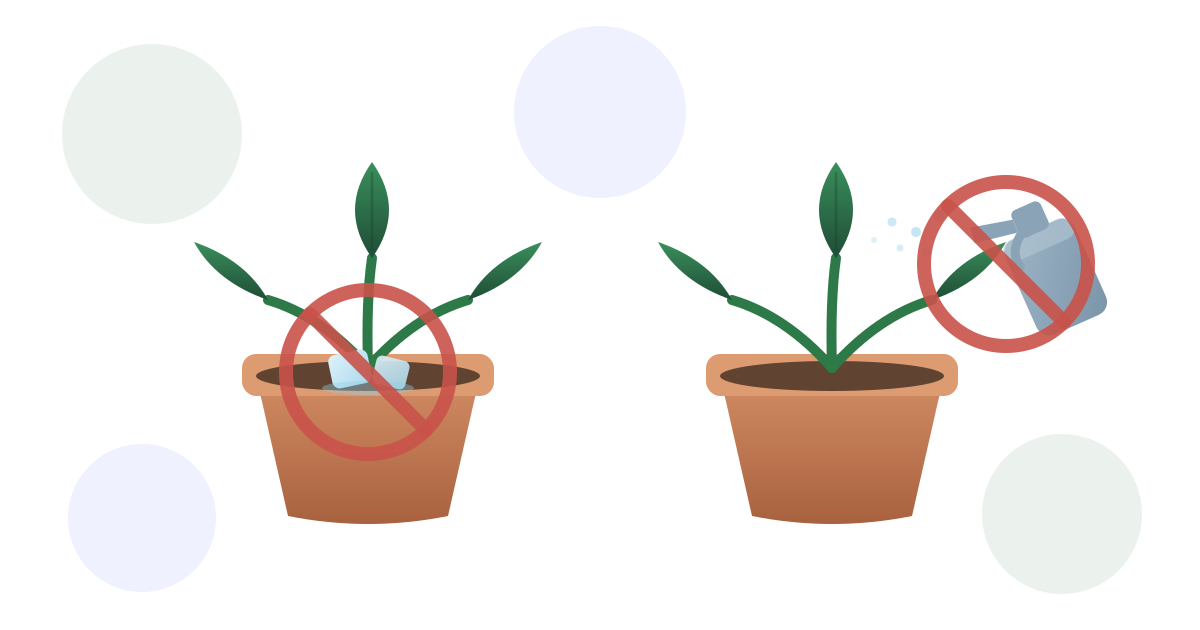
The pitch is appealing: drop a couple of ice cubes on the soil, they melt slowly, no mess, no overwatering. It's especially popular for orchids.
The problem is temperature. Most common houseplants are tropical, and their roots do not enjoy a slow drip of near-freezing water. Cold water can shock the roots and, over time, damage the fine root hairs that actually absorb moisture. Ice cubes also water unevenly, wetting one small spot while the rest of the root ball stays dry. If the tidiness appeals to you, use room-temperature water and a small spouted can instead. You get the control without chilling the roots.
Myth 2: Misting keeps your plants hydrated
Misting looks like care. It feels like care. But a spray of water on the leaves does almost nothing for a plant's hydration, because plants drink through their roots, not their foliage.
The myth comes from a half-truth: some tropical plants do like higher humidity. But a quick mist raises the humidity around the leaves for a few minutes at most, then it's gone. Worse, water sitting on leaves in still air can actually invite fungal spots and bacterial problems. If you have a genuinely humidity-hungry plant like a calathea or a fern, a pebble tray, grouping plants together, or a small humidifier does far more than a spray bottle ever will.
Myth 3: A little water every day is gentler
This one feels intuitive: small, frequent sips must be kinder than an occasional soaking. In practice it's one of the most common ways people quietly harm their plants.
Light daily watering only wets the top layer of soil, so the deeper roots stay dry and never develop properly. Meanwhile the surface stays perpetually damp, which is an open invitation to fungus gnats and rot. Most plants prefer a thorough soak, letting water run all the way through until it drains from the bottom, followed by a proper dry-down before the next drink. It mimics how rain actually works: a heavy fall, then a dry spell.
Myth 4: Yellow leaves always mean you need more water
When a leaf yellows, the reflex is to reach for the watering can. But yellowing is far more often a sign of overwatering than under. Soggy soil suffocates roots, and a struggling root system shows up as yellow, droopy leaves, which look almost identical to thirst.
Adding more water to an already overwatered plant is how a recoverable problem becomes root rot. Before you water on instinct, check the soil with your finger. If it's still damp an inch or two down, water is the last thing your plant needs.
Myth 5: More drainage rocks at the bottom help
The idea that a layer of gravel at the bottom of a pot improves drainage has been around forever, and it's backwards. Water doesn't move easily from fine soil into a coarse rock layer, so instead of draining away, moisture pools in the soil just above the rocks, right where the roots sit.
What actually helps is simple: a pot with real drainage holes and a well-draining potting mix. Skip the rocks.
The thread that ties these together
Notice what every myth has in common. Each one substitutes a fixed ritual, ice cubes, a daily spritz, a handful of gravel, for actually paying attention to what the plant needs right now. And "right now" depends on the season, the weather, the light, the pot, and when you last watered.
That's the whole idea behind Leafwise. Instead of a one-size-fits-all rule, it looks at your specific plant in your specific conditions, checks the local weather, remembers your care history, and tells you when this plant actually needs water, not when a viral tip says it should. The best watering advice isn't a clever trick. It's the one that fits the plant in front of you.